

Staying in has become much more than cancelling plans or spending a quiet night on the sofa. For many people, especially after years of busier routines, hybrid work and rising living costs, home has become where we rest, reset, work, cook, socialise and regain a bit more control over everyday life.
That is where nesting comes in. Nesting is the idea of making your home feel more comfortable, functional and enjoyable, so it becomes a space you genuinely want to spend time in. In this guide, we mean home-and-lifestyle nesting, not pregnancy nesting or divorce “birdnesting”.
That might mean decluttering a room you have been avoiding, doing a proper clean, setting up a cosy corner for reading, organising your kitchen cupboards, making your bedroom feel calmer or booking help for the jobs you never quite get round to.
Overall, nesting is a simple place to start when you want to slow down, spend more intentional time at home or make your space feel easier to live in.

What is nesting
Nesting is a lifestyle trend based on enjoying time at home and making your living space feel more comfortable, practical and personal.
The word comes from nest: a place that feels safe, warm and familiar. In everyday life, nesting is about turning your home into that kind of space. As a result, it becomes somewhere you can rest properly, work with fewer distractions, invite people over without stress or simply enjoy a slow evening without feeling surrounded by unfinished chores.
Nesting can look different depending on your home, schedule and budget. For example, someone living in a shared flat might focus on making one bedroom feel calmer and more organised. Meanwhile, someone living with a partner or family might create better routines around cleaning, laundry and shared spaces. For someone who works from home, it might mean separating work and rest areas so the whole flat does not feel like an office.
It can include things like:
- Clearing surfaces that have become dumping grounds.
- Making a bedroom feel more restful.
- Doing a deep clean after a busy period.
- Creating a small reading, coffee or film-night corner.
- Organising a wardrobe, kitchen cupboard or storage area.
- Reducing visual clutter.
- Cooking at home more often.
- Booking help for cleaning, ironing or home organisation.
The goal is not to stay indoors all the time. It is to make the time you do spend at home feel better.
If you want to explore more ways to make everyday life easier at home, you can browse more ideas on the Webel blog. For specific home-related inspiration, the tips section is the most relevant place to continue.
Why nesting helps at home
Although nesting might sound like a décor trend, its benefits are much more practical. The way your home feels can affect your mood, energy, concentration and ability to switch off.
A cluttered or messy space can create a low-level sense of stress. Even when you are not actively thinking about it, seeing laundry, dishes, paperwork, dust or half-finished tasks can make it harder to relax. On the other hand, when your home feels cleaner and more organised, it is easier to breathe, rest and enjoy your time there.
One of the biggest benefits of nesting is the feeling of calm it can create. This does not require a full home makeover. Sometimes the difference comes from small changes: a clearer desk, a cleaner bathroom, a more organised wardrobe, fresh bedding or a kitchen that feels easier to use.
Nesting can also help you build better routines. When your home is set up around how you actually live, daily tasks become less frustrating. You know where things are, you are not constantly moving clutter from one surface to another and you can use your space without feeling like everything needs sorting first.
It can make simple home plans more enjoyable too:
- Having friends over without rushing around for an hour beforehand.
- Working from home in a space that feels less chaotic.
- Cooking dinner without battling a messy kitchen.
- Spending a Sunday at home without feeling guilty about everything on your to-do list.
- Coming back after a long day and feeling like your home helps you recover.
Nesting is not about perfection. It is about making your home support your life instead of adding more pressure to it.
If you’re starting from scratch: first steps
To start nesting at home, you do not need to redecorate, buy new furniture or spend a whole weekend transforming every room. In fact, the best way to begin is usually much simpler: choose one area and make it easier to live with.
First, start by asking yourself:
- Which part of my home makes me feel most stressed?
- What have I been putting off for weeks?
- Where do I spend the most time?
- Which area would I like to enjoy more?
- What do I use every day, and what is just taking up space?
Then, pick one small zone. It could be your bedside table, your desk, the kitchen counter, a wardrobe, the hallway or one corner of the living room. Starting small makes it easier to see progress quickly and avoid turning nesting into another overwhelming task.
A simple process could look like this:
- Clear what you can see.
Before buying storage boxes or reorganising every cupboard, start with visible surfaces. Clear the table, desk, kitchen counter, sofa or floor space. This creates an immediate sense of change. - Remove what you do not use.
Nesting is not about adding more things. It is often about reducing what gets in the way. Look for duplicated items, clothes you never wear, expired products, papers you no longer need or objects that make a room feel crowded. - Group things by use.
Keep everyday items easy to reach and move less-used things into storage. This makes it easier to maintain the space after you have tidied it. - Create one cosy or useful corner.
This could be a chair with a blanket, a clear bedside table, a tidy desk, a plant by the window or a small tray for the things you use every morning. Small details can make a space feel more intentional. - Finish with a proper clean.
Once the area is clearer, cleaning it properly helps everything feel fresher. Dust, floors, mirrors, kitchen surfaces, bathroom tiles or fresh bedding can make a bigger difference than you might expect.
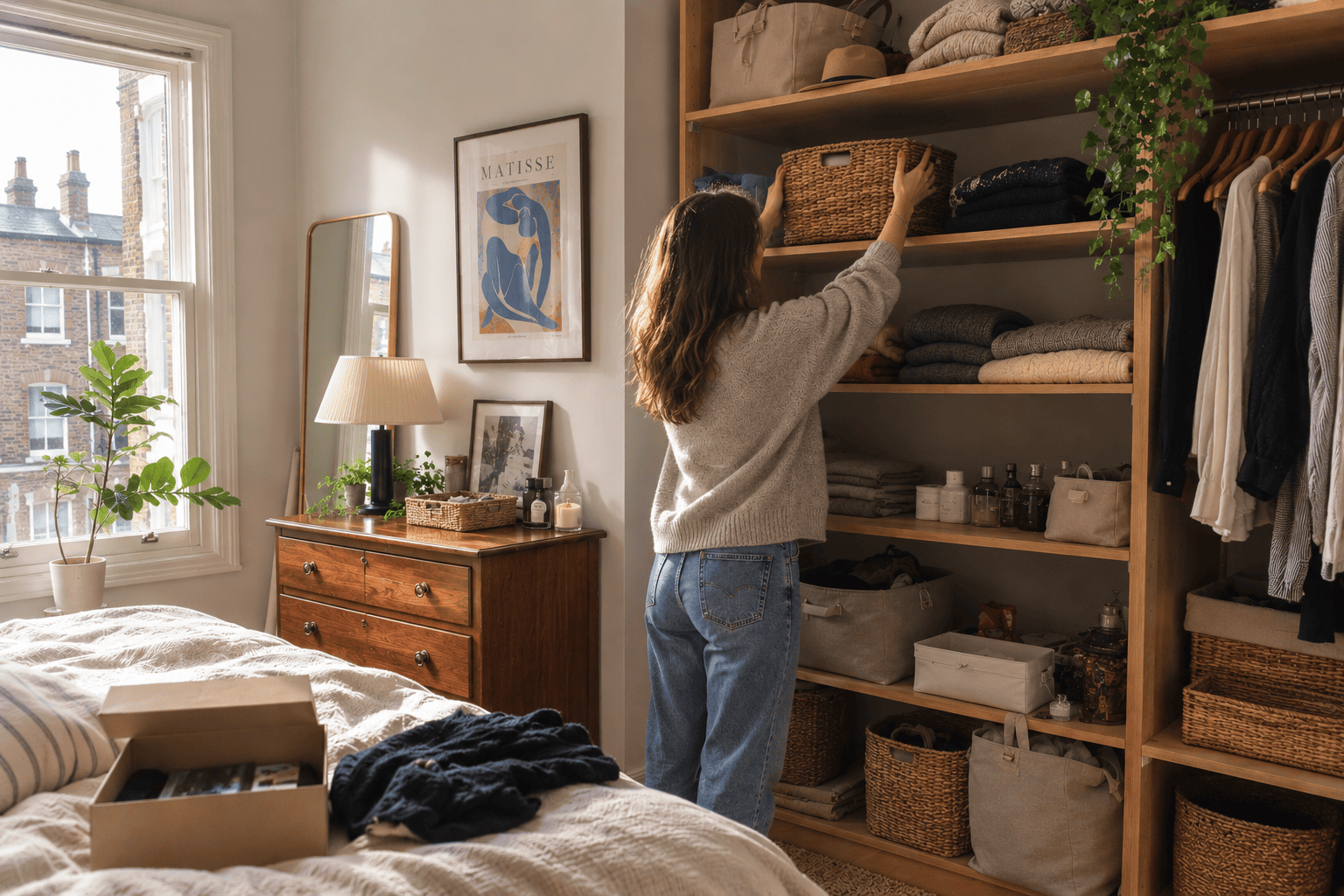
For example, if you are short on motivation, try working in short blocks. Set a timer for 20 or 30 minutes and focus on one area only. Nesting should make your home feel easier to live in, not become a huge project you feel guilty about.
If you’re short on time: what to delegate
One of the most useful ideas behind nesting is that your home should fit your real life. And in real life, most people do not have unlimited time to clean, organise, work, cook, exercise, see friends, rest and keep on top of every small household task.
However, when your home does not feel how you want it to feel, the answer is not always to do more yourself. Sometimes the most practical step is to delegate the jobs that take too much time, energy or mental space.
That can include:
- Regular home cleaning: Helpful if you want your home to feel consistently fresher without spending several hours each week cleaning.
- Deep cleaning: Useful after a busy period, before hosting, after moving house, at the start of a new season or whenever your home needs a reset.
- Ironing or laundry support: If clothes are constantly piling up and making the whole room feel messier, delegating this can make your routine feel lighter.
- Home organisation: A wardrobe, kitchen, storage cupboard or spare room can be easier to tackle with help, especially if you do not know where to start.
- Small home tasks: Assembling furniture, fixing a blind, hanging shelves or dealing with maintenance jobs can also change how your home feels day to day.
Delegating does not mean you care less about your home. It can mean the opposite: you are choosing to spend your time where it matters most and getting support with the tasks that keep getting pushed to the bottom of the list.

Therefore, when your goal is to make your home feel calmer but you do not have hours to do everything yourself, booking practical help is often the fastest way to get started and to keep the progress going.
Book cleaning or home organisation help
Book cleaning or home organisation help in a few taps.
Download the appHow to book help on Webel
If you want to make your home feel cleaner, calmer or more organised, Webel helps you find and book professionals for home services from one app.
The process is simple. First, follow these steps:
- Search for the service you need.
Choose the type of help you are looking for, such as cleaning, ironing, home organisation or another home-related service. - Add where you need the service.
This helps Webel show professionals available in your area. - Compare professionals.
Review profiles, prices, ratings and availability before choosing who to book. - Choose the date, time and details.
Depending on the service, you can specify what you need and when you would like it done. - Book and pay online.
Your booking and payment are managed through the app, so everything stays in one place. - Enjoy your home with less mental load.
Once the booking is confirmed, you can focus on the part that matters: feeling better in your space.
You can start by exploring home services on Webel, keep reading more ideas on the Webel blog, or visit the home tips category.
The point is not that nesting has to be done alone. Sometimes the most realistic way to care for your home is to get help with the tasks that take the most time.
Frequently asked questions
What does nesting mean?
Nesting means making your home feel more comfortable, functional and enjoyable so you want to spend time there. The word comes from nest, which suggests a safe and cosy space.
Is nesting the same as pregnancy nesting or “birdnesting” after divorce?
No. In this article, nesting means creating a calmer, more functional home routine. We are not referring to pregnancy nesting or co-parenting “birdnesting” arrangements.
Is nesting just staying at home?
No. Staying at home can be part of nesting, but the idea is bigger than that. Nesting is about improving the quality of the time you spend at home by making your space work better for you.
Why has nesting become popular?
Nesting has become more visible as more people spend time at home, work more flexibly and look for practical ways to reduce daily stress and make their routines feel lighter.
How can I start nesting if my home is messy?
Start with one small area, such as a desk, bedside table, wardrobe or kitchen counter. Clear what you can see, remove anything you do not use and clean the space before moving on to another area.
Do I need to buy new things to start nesting?
No. You can start nesting with what you already have. In many cases, decluttering, cleaning and reorganising make a bigger difference than buying new décor.
Can nesting help if I work from home?
Yes. A more organised and comfortable home can make it easier to concentrate during the day and switch off afterwards. Even small changes, such as clearing your desk or separating work items from rest spaces, can help.
What home services can support nesting?
Cleaning, deep cleaning, ironing, laundry support, home organisation and small household tasks can all help make your home feel more comfortable and easier to maintain.
Can I book home help through Webel?
Yes. On Webel, you can search, compare and book professionals for home services, depending on availability in your area.
Ultimately, nesting is not about creating a perfect home. It is about building a space that helps you live better: somewhere calmer, cleaner, more practical and more enjoyable to spend time in.
Sometimes that starts with clearing one corner. Other times, it starts with a deep clean. In some cases, it starts with booking help for the tasks you do not have time to do yourself.
Explore home services
Find practical help for cleaning, organisation and home tasks from one app.
Download the app